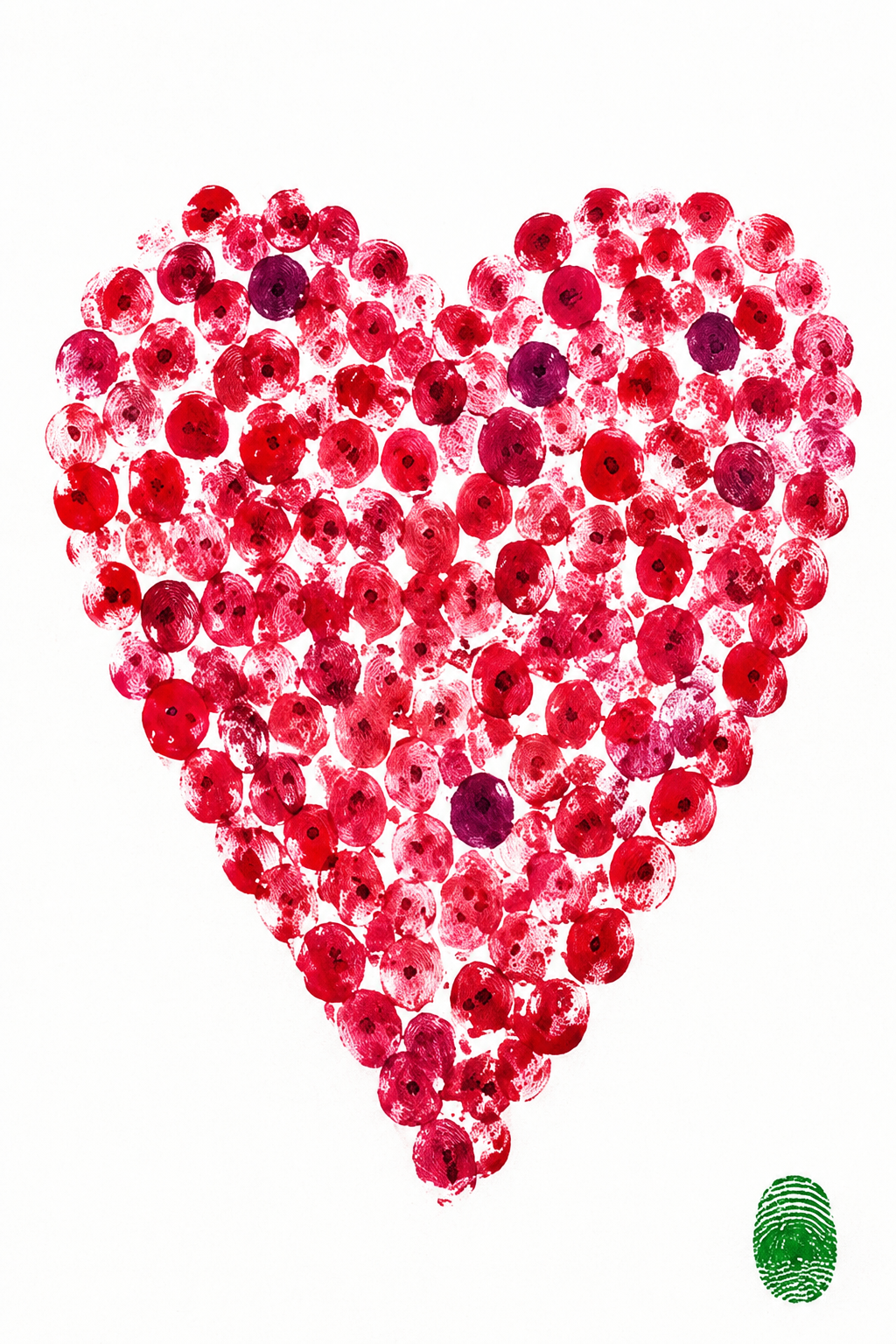
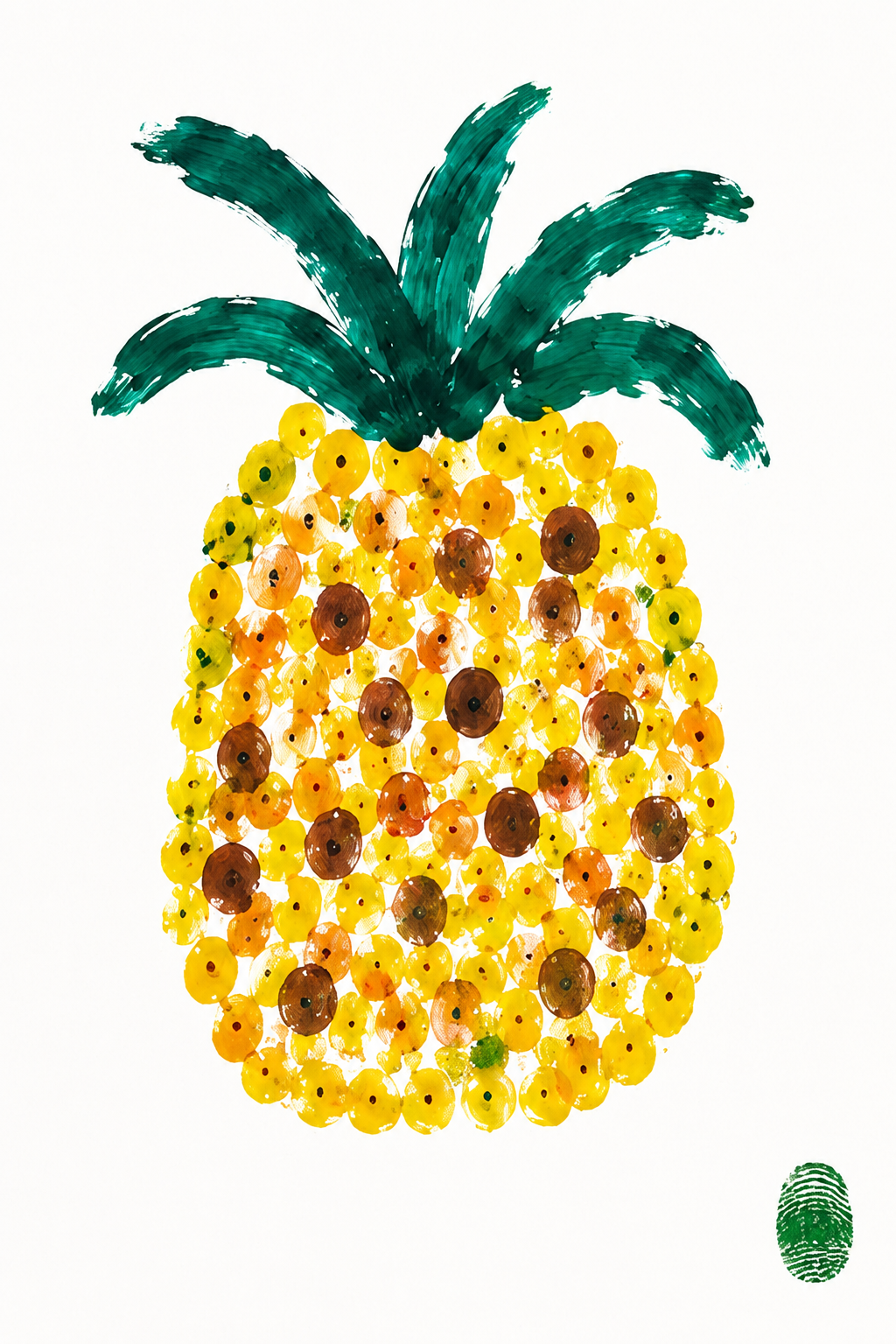
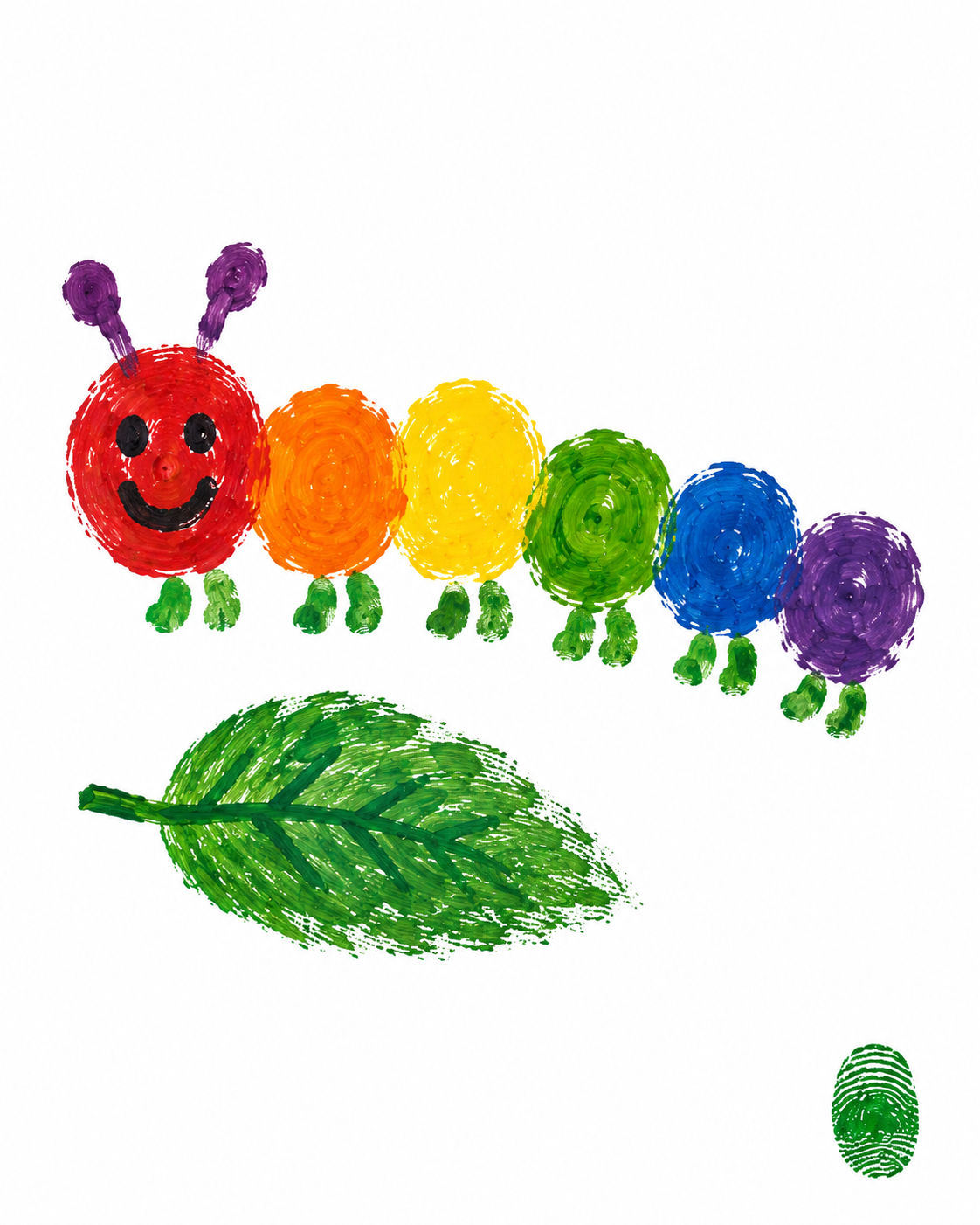
Wrinklage alone might have sustained an entire career. Jacobim did not stop there.
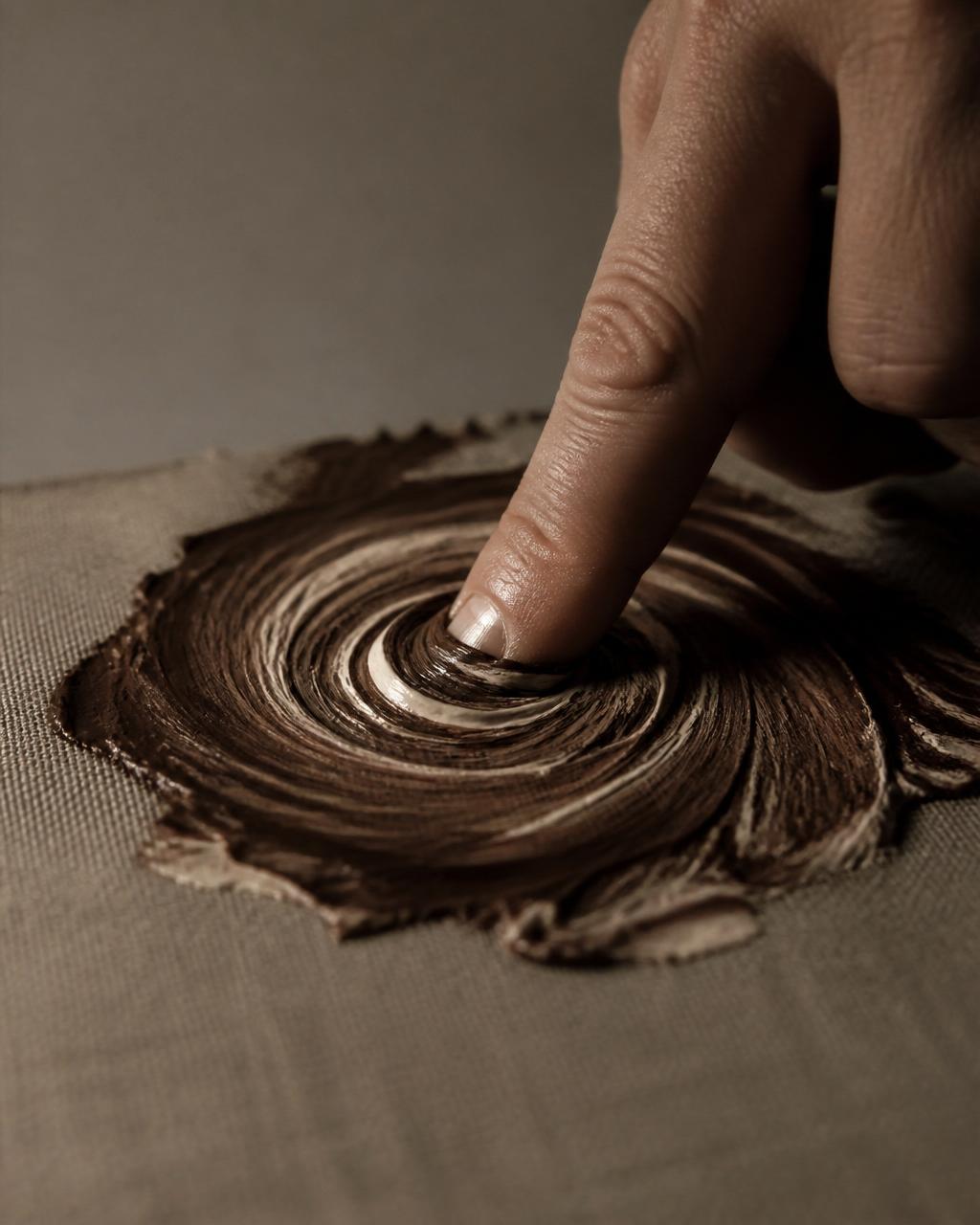
During the making of Poppy Fields XII, his right index finger caught in a dense passage of pigment. Rather than lifting away, he rotated against the resistance.
The stroke seemed to move backward and forward at once. Its inner ridge returned toward the point of contact while its outer edge continued beyond it.
Jacobim stopped painting immediately and nearly abandoned art altogether. The mark was, in his view, too perfect and incapable of improvement without becoming something lesser. “There was nowhere left to go,” he later wrote. “Only further from perfection.”
He has spent the rest of his life trying to return to it.
The measurement
The original movement was later measured at precisely three hundred and sixty degrees. Jacobim uses no guide and performs no calculation. He feels the angle before it is measured and rejects anything less.
During one examination, an instrument contradicted him.
The device was later found to have been improperly calibrated.
The turn was exact.
No later mark has satisfied him. Decades of refinement have made him more precise, but not, in his view, closer. Mastery has only expanded his ability to perceive the distance between the first accident and every deliberate attempt that followed.
The first turn was free of the person trying to make it. Everything since has contained the error of self within.
The technique requires the nail to remain nearly fixed while the fingertip rotates beneath it under concentrated pressure. Angle, resistance, pressure, and release must resolve within the same instant. A slight imbalance produces a fingerprint, a spiral, or an ordinary smear. The completed turn produces something less stable: a mark that appears to contain its own reversal without interrupting its movement.
Others have attempted the maneuver. None has reproduced the effect convincingly. Several damaged the nail bed or distal joint while trying. Jacobim’s own finger has required multiple surgeries, and the nail no longer grows entirely straight.
Jacobim believes the turn can be recognized before it can be explained. Prospective owners are occasionally shown a painting in silence and allowed to approach it without instruction. Sales have been withdrawn afterward, sometimes without explanation.
The studio does not say that a buyer must understand the technique. Understanding, Jacobim believes, is too easily performed.
They must notice that something has happened.
Collectors who speak first about palette, scale, investment value, or placement have occasionally learned that the work is no longer available. On one such occasion, Jacobim reportedly returned a deposit after the purchaser described the turn as “a nice detail.”
The work was sold several years later.
Jacobim has never considered ownership a financial conclusion. To him, a painting remains vulnerable to the quality of attention surrounding it.
To possess something you cannot perceive is only another form of absence.
The three-hundred-sixty-degree turn is the center of Jacobim’s practice because it contains the conflict he has never resolved: the desire to reproduce a moment whose perfection may have depended on his not yet intending it.
Every painting is another attempt. Every completed turn is, to others, evidence of mastery. To Jacobim, it is evidence that the first has still not returned.