01
The Unfinished Medium
A child chooses before understanding what the choice says about them. An adult increasingly chooses through the imagined eyes of others.
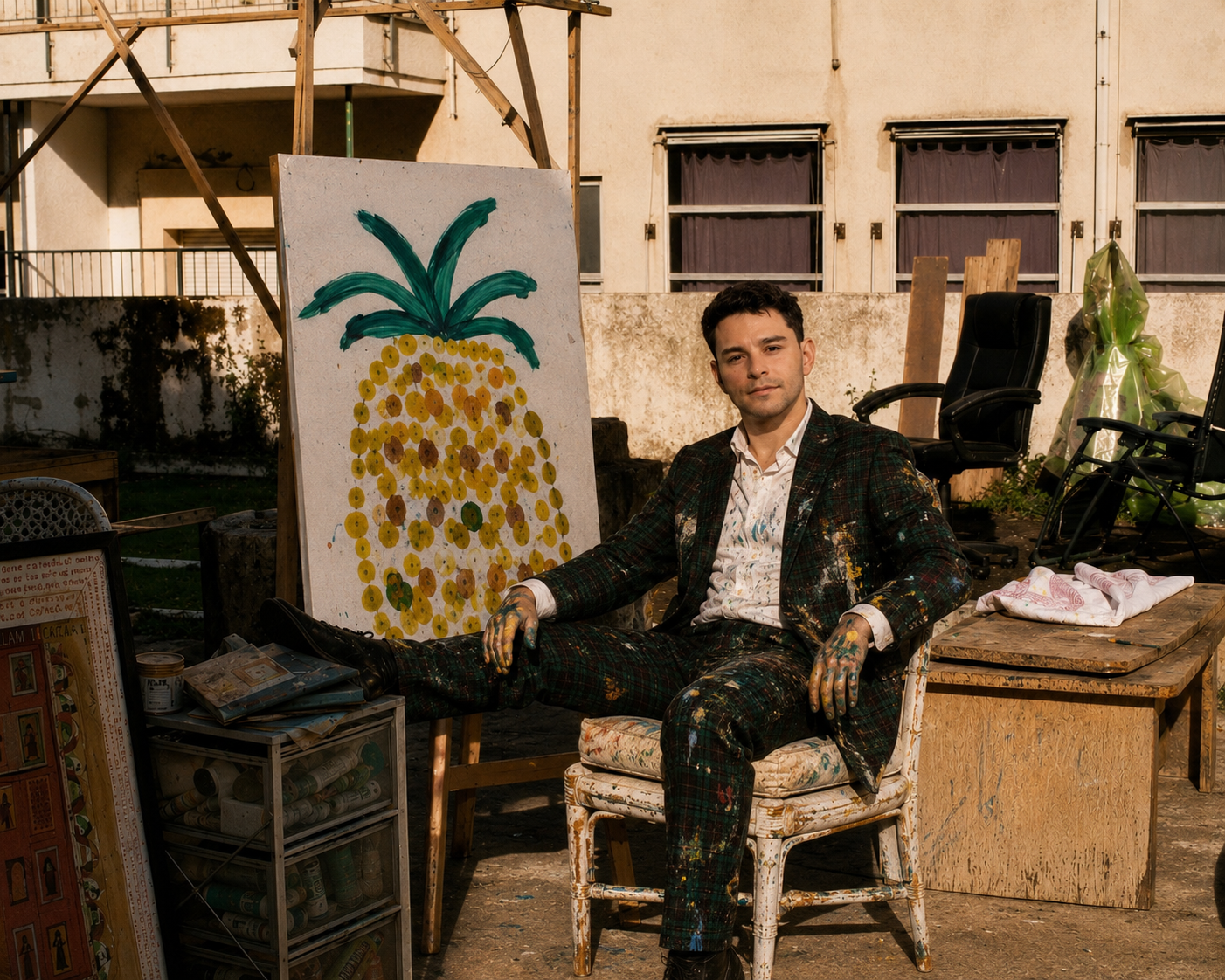
Max Jacobim began perfecting the craft of finger painting at seven months old. By three, he was producing handprint turkeys whose feathers radiated from the palm at mathematically exact intervals. Later analysis found their symmetry nearly impossible for trained adults to reproduce, even with measured guides.
The paintings were unmistakably the work of a child yet impossible for adults to reproduce.
Jacobim spoke little, avoided eye contact, and showed almost no interest in praise. He cared only whether the geometry held. Turkeys with uneven spacing were often destroyed in rage.
Adults often mistook his silence for an absence of understanding. They were less prepared for the reality that he was redefining a genre.
Born on a farm in 1994, Jacobim was the youngest child of a museum conservator and a translator. His father, an erector.
At twelve, he abruptly abandoned his studies, consumed by what he called evolution’s “most neglected triumph”: the complete and utter transformation of the fingertip following prolonged immersion in water.
To most, it was a wrinkle. Jacobim’s journals described it instead as a temporary architecture of ridges that increased grip and changed how pigment gathered, dragged, and released across linen, creating a form of contact no manufactured instrument could reproduce.
Jacobim promptly relocated to Warsaw, in search of conditions capable of prolonging wrinklage.
There, he developed a rigid pre-painting routine. Before each session, he soaked his hands in lukewarm water until the skin reached the exact texture necessary. He recorded the temperature, immersion time, and how long the ridges held their shape after drying. Sessions were abandoned when wrinklage formed unevenly between fingers or began to smooth prematurely.
The cold winters preserved the ridges but thickened the paint. Jacobim therefore began warming each pigment in his other palm before contact. What began as adaptation became the governing condition of his work.
Jacobim's Philosophy
“Most people never discover what they want. They discover whose wanting they trust, then mistake imitation for a self.”
Read The First Correction →
The accident became the center of Jacobim’s practice.
Read The Turn →02
Silence
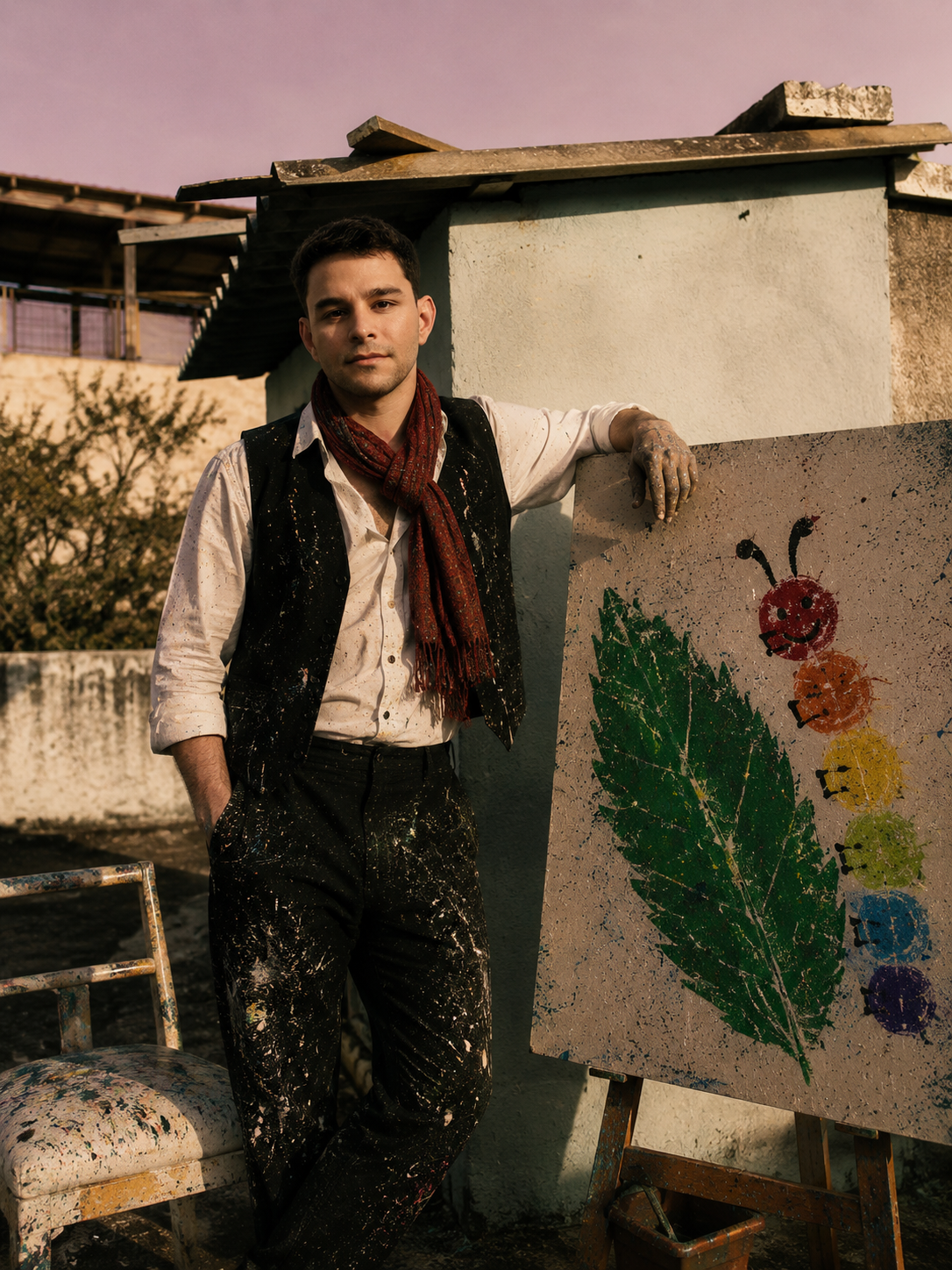
Jacobim works standing, usually at night, completing each painting in a single session lasting 10 to 14 hours.
Once the first mark is made, the painting is not left until complete. Works in progress are not photographed, as Jacobim believes an unfinished painting should not be required to explain itself.
Annual release is limited to two or three paintings, governed by the recovery of the finger rather than by demand.
Jacobim does not give interviews. He does not appear in photographs willingly. He has no public social media. He communicates mostly through handwritten notes and, occasionally, a typewriter he has owned since he was nineteen.
His first exhibition was held in a small room in Basel and attended by fewer than a dozen people.
Since then, work has been acquired. The details are held privately. He does not discuss prices, sales, waiting lists, or collections.
“A painting is a painting. The rest is rumor.”
Jacobim resides part time in a farmhouse outside Kyoto with his wife, the poet Julie Iwasaki, and small dog, voyeur.