The turn is the center of Jacobim’s work, but the same refusal of distance governs the entire surface.
The paintings are made without tools. Pigment is mixed by hand and warmed in the palm before it touches the linen. Jacobim works with the fingertips, nails, knuckles, and heel of the hand. On rare occasions, the balls of the feet and toes enter the work.
Temperature and fatigue enter the paintings. Moisture, scar tissue, hesitation, and pressure remain visible. The surface records not only what Jacobim intended, but the condition of the body attempting it.
Nothing separates the painter from the consequence of the mark.
The hand does not depict contact. It leaves contact behind.
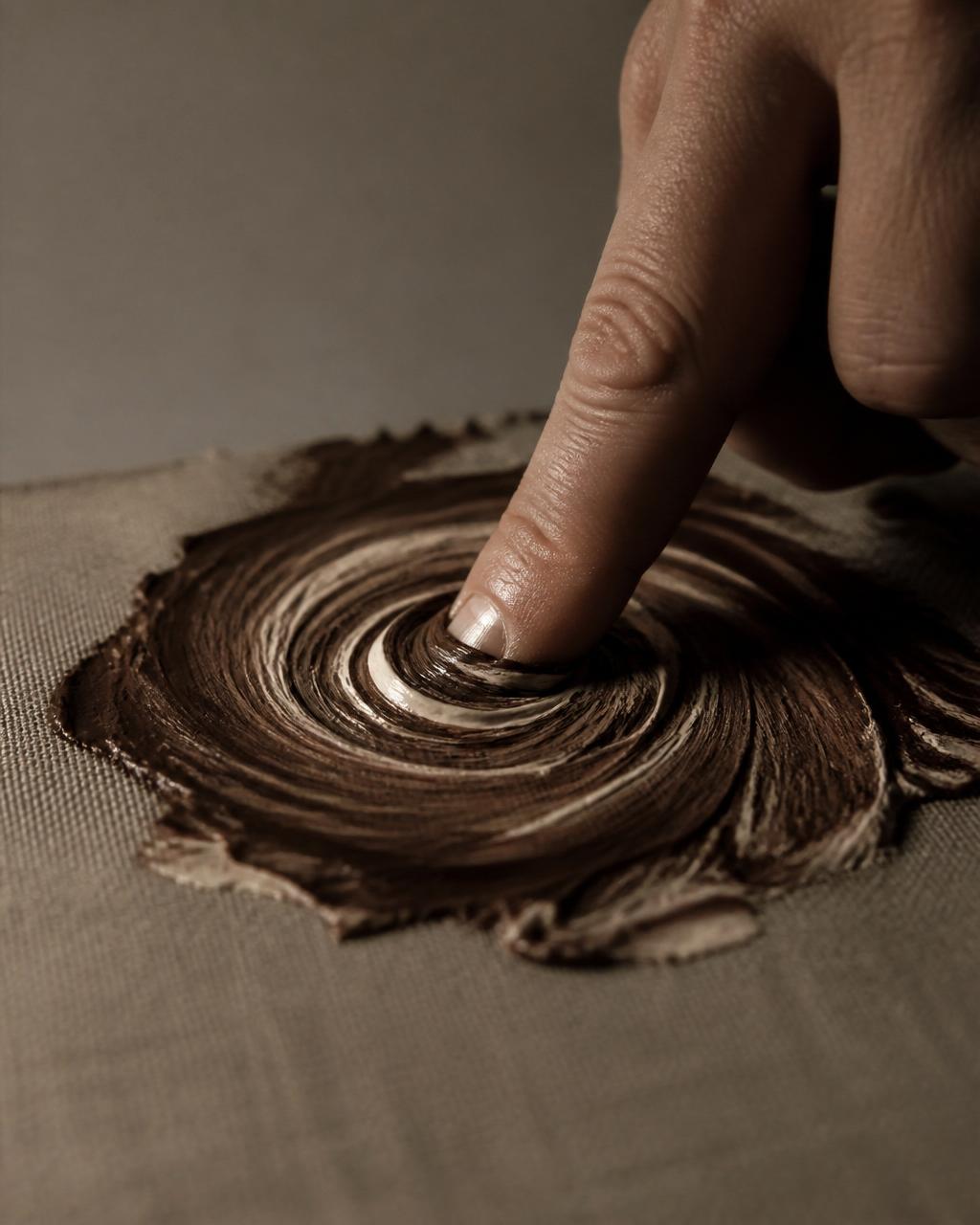
From across a room, the paintings may appear atmospheric, wounded, quiet, or monumental. Only on approach do fingerprints, nail edges, compressed ridges, and traces of repeated turns reveal themselves.
The knowledge that the work was finger-painted arrives after the response to it. For Jacobim, this is intentional.
The beauty came first. The hierarchy followed.
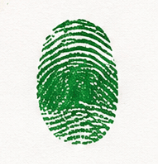
Every completed painting ends with Jacobim’s fingerprint in the lower-right corner. It is made during the final sequence with the same finger and pigment used throughout the work.
He does not call it a signature, but a refusal to pretend that painting is anything other than a record of contact.
Direct contact is Jacobim's resistance to the First Correction.