The Unfinished Medium
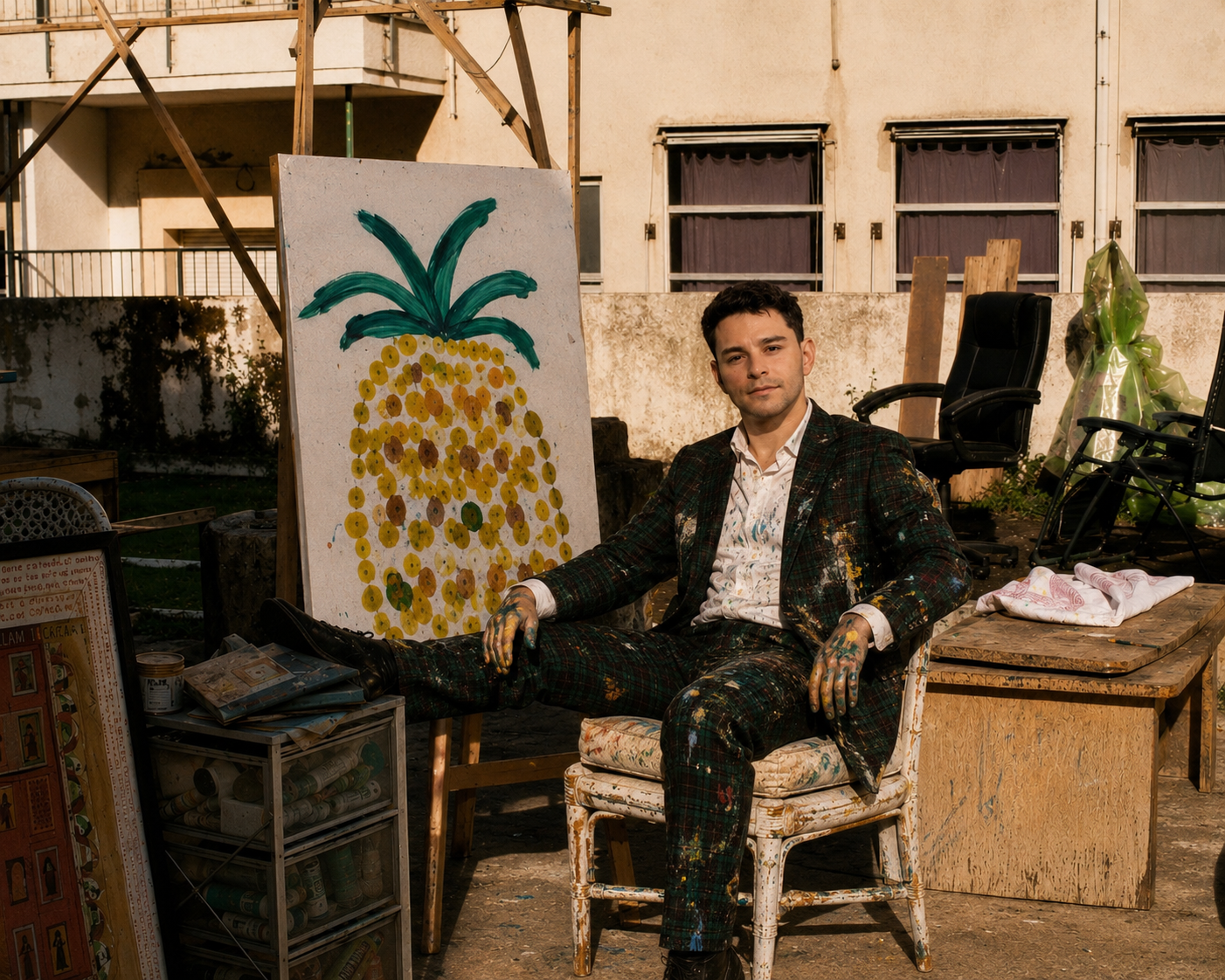
He began at seven months old. By three, he was producing handprint turkeys whose feathers radiated from the palm at mathematically equal intervals. Later analysis found their symmetry difficult for trained adults to reproduce even with measured guides.
The paintings were unmistakably the work of a child yet nearly impossible for adults to reproduce.
Jacobim spoke little, avoided eye contact, and showed almost no interest in praise. He cared whether the geometry held. Turkeys with uneven thumbs were destroyed.
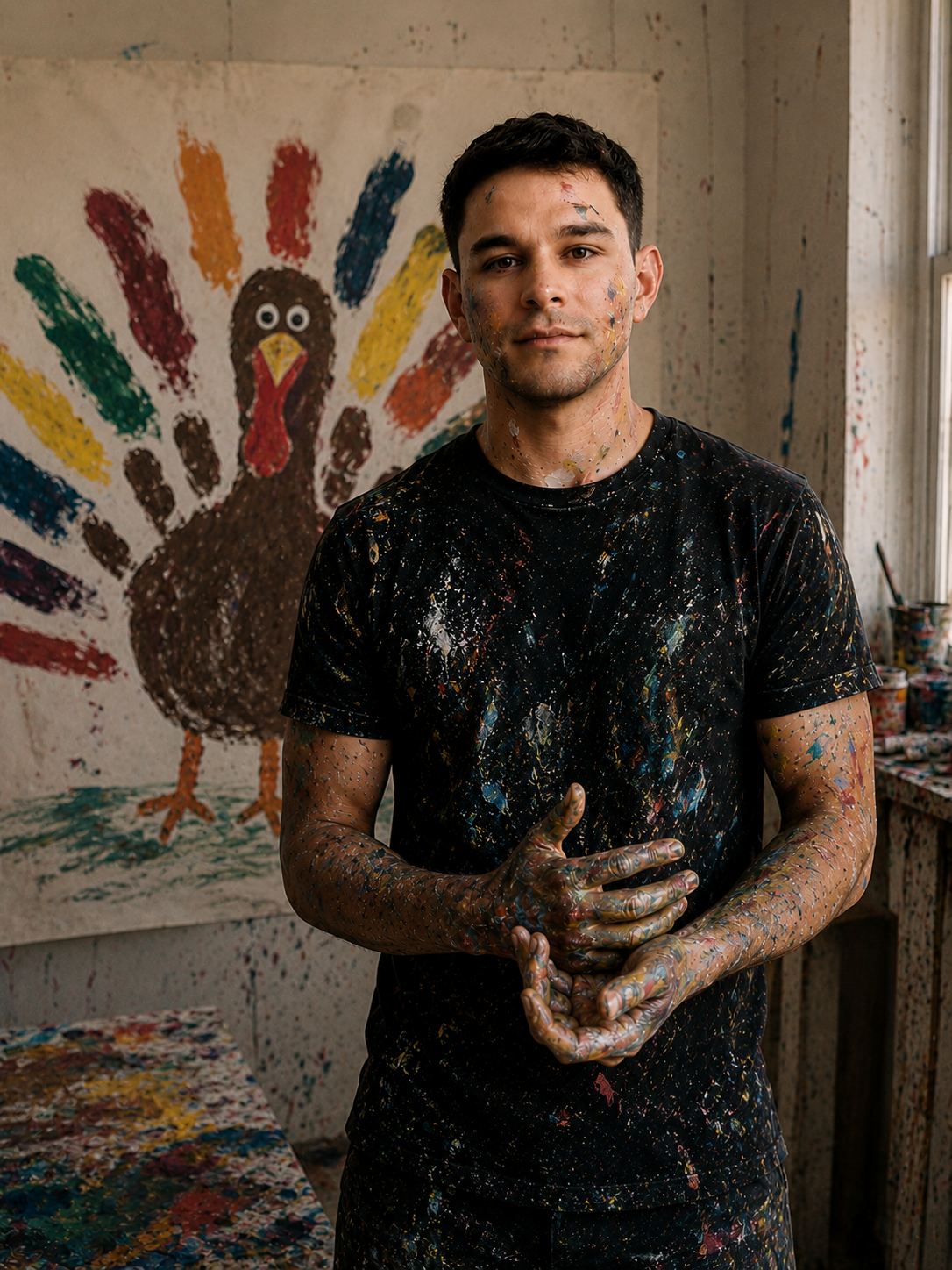
Born in rural Pennsylvania in 1994, Jacobim was the youngest child of a museum conservator and a translator who worked primarily with languages no longer spoken. Adults often mistook his silence for an absence of understanding. They were less prepared for the possibility that he was attending to distinctions they could not perceive.
At nineteen, he entered art school in Düsseldorf. He left after two semesters, not because he was ahead of anyone or behind them, but because he could not work while being watched.
He spent the following winters in an unheated warehouse in Zürich, where cold pigment forced him to begin warming paint in his palm.
There, an accident beneath his right index finger forever changed his life: the thirty-degree turn.
The Turn
The infamous thirty-degree turn began by accident during Jacobim’s first winter in Zürich.
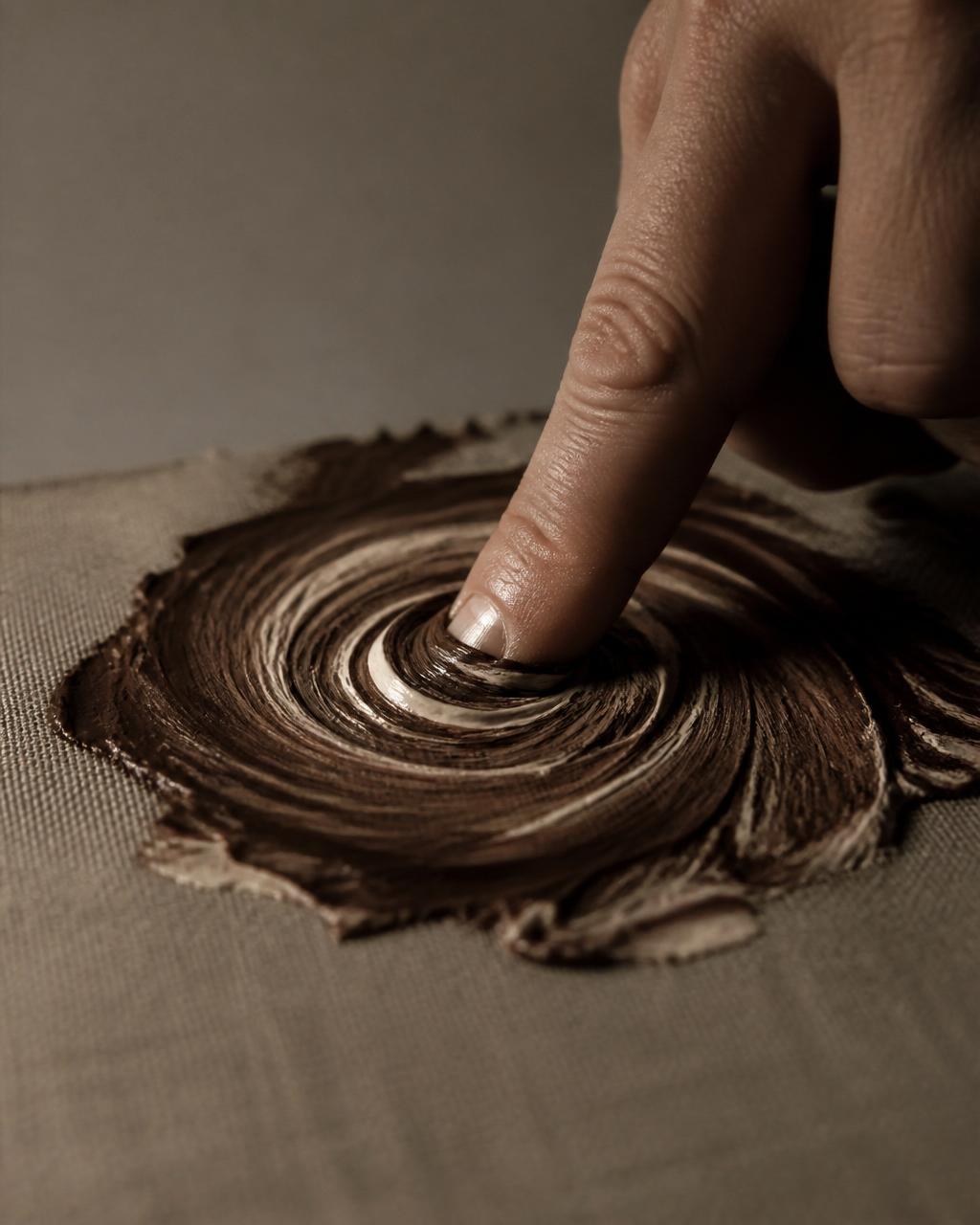
The warehouse had no heat. Cold pigment resisted the skin, so he began warming it in his palm before pressing it into the linen. One night, his right index finger caught in a dense passage of paint. Rather than lifting away, he rotated against the resistance.
The stroke seemed to move backward and forward at once. Its inner ridge returned toward the point of contact while its outer edge continued beyond it. The effect lasted only as long as the eye remained uncertain which direction to follow.
Jacobim immediately froze and stopped painting.
He has spent the rest of his life trying to make that mark again.
The original movement was later measured at precisely thirty degrees. Jacobim uses no guide and performs no calculation. He senses the angle before it is measured and rejects turns whose difference others struggle to locate.
During one examination, an instrument contradicted him. The device was later found to have been improperly calibrated.
The turn was exact.
No later mark has satisfied him. Decades of refinement have made him more precise, but not, in his view, closer. Mastery has only expanded his ability to perceive the distance between the first accident and every deliberate attempt that followed.
The first turn was free of the person trying to make it. Everything since has contained me.
The technique requires the nail to remain nearly fixed while the fingertip rotates beneath it under concentrated pressure. Angle, resistance, pressure, and release must resolve within the same instant. A slight imbalance produces a fingerprint, a spiral, or an ordinary smear. The completed turn produces something less stable; a mark that appears to contain its own reversal without interrupting its movement. A perfectly fluid motion contained within its own chaos.
Others have attempted it. None has reproduced the effect convincingly. Several damaged the nail bed or distal joint while trying. Jacobim’s own finger has required multiple surgeries, and the nail no longer grows entirely straight.
Jacobim believes the turn can be recognized before it can be explained. Prospective owners are occasionally shown a painting in silence and allowed to approach it without instruction. Sales have been withdrawn afterward, sometimes without explanation.
Jacobim does not say that a buyer must understand the technique. Understanding, Jacobim believes, is too easily performed.
They must notice that something has happened.
Collectors who speak first about palette, scale, investment value, or placement have occasionally learned that the work is no longer available. On one such occasion, Jacobim reportedly returned a deposit after the purchaser described the turn as “a nice detail.”
The work was sold several years later.
Jacobim has never considered ownership a financial conclusion. To him, a painting remains vulnerable to the quality of attention surrounding it.
To possess something you cannot perceive is only another form of absence.
The thirty-degree turn is the center of Jacobim’s practice because it contains the conflict he has never resolved: the desire to reproduce a moment whose perfection may have depended on his not yet intending it.
Every painting is another attempt.
Every completed turn is, to others, evidence of mastery.
To Jacobim, it is evidence that the first has still not returned, and may never due to the inherent conflict in its possibility.
Contact
The turn is the center of Jacobim’s work, but the same refusal of distance governs the entire surface.
The paintings are made without tools. Pigment is mixed by hand and warmed in the palm before it touches the linen, a practice retained from the unheated warehouse in Zürich. Jacobim works with the fingertips, nails, knuckles, and heel of the hand.
Temperature enters the painting. Fatigue enters it. Moisture, scar tissue, hesitation, and pressure remain visible. The surface records not only what Jacobim intended, but the condition of the body attempting it.
Nothing separates the painter from the consequence of the mark.
The hand does not depict contact. It leaves contact behind.
From across a room, the paintings may appear atmospheric, wounded, quiet, or monumental. Only on approach do fingerprints, nail edges, compressed ridges, and the traces of repeated turns reveal themselves.
The knowledge that the work was finger-painted arrives after the response to it.
For Jacobim, the order is intentional.
The beauty came first.
The hierarchy arrived afterward.
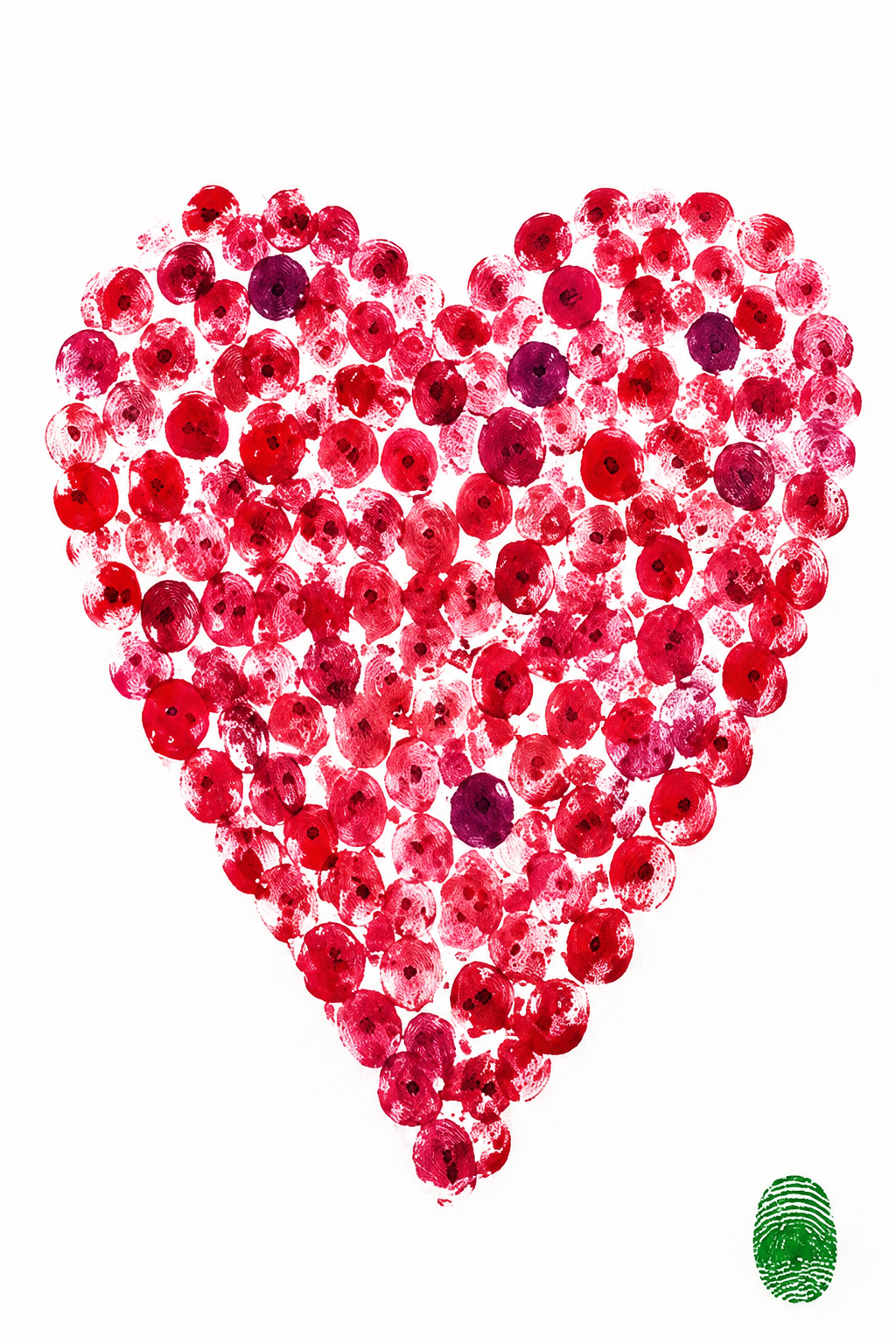
Every completed painting ends with Jacobim’s fingerprint in the lower-right corner. It is made during the final sequence with the same finger and pigment used throughout the work.
He does not call it a signature, but rather a refusal to pretend that painting is anything other than a record of contact.
The First Correction
Jacobim believes children do not make primitive art.
Adults make overcorrected art.
A child chooses before understanding what the choice says about them. An adult increasingly chooses through the imagined eyes of others.
Jacobim calls the moment instinct becomes conscious of its audience the First Correction.
Afterward, desire absorbs approval. Objects acquire status. Pleasure becomes something to defend. People learn which preferences make them appear intelligent, cultivated, rebellious, or rich.
Eventually, they experience the imitation as identity.
Most people never discover what they want. They discover whose wanting they trust, then mistake the imitation for a self.
Jacobim does not seek a return to childhood. He considers that impossible. Pretending otherwise would merely turn childhood into another adult performance.
His question is whether instinct can survive mastery without being corrected out of existence.
The thirty-degree turn leaves the question unresolved. Jacobim has imposed extraordinary control on the form of painting most associated with having none. The original turn was perfect because it occurred accidentally. Every later turn carries the burden of knowing what it is trying to become.
He has spent his life using discipline to recover a moment that discipline may have made impossible.
Macaroni appears rarely in Jacobim’s mature work, though it has remained part of the practice since childhood. He refuses to enlarge it or cast it in bronze. Either gesture would make the material easier to respect and therefore less revealing.
It remains macaroni.
The adjustment is left to the viewer.
A piece of dried pasta possesses curvature, proportion, texture, repetition, and shadow. Viewers who dismiss it do not reject those qualities. They reject what they have been taught the material means.
Jacobim does not argue with them.
He regards the speed of their judgment as sufficient evidence.
Silence
Jacobim works standing, usually at night, completing each painting in a single session lasting ten to fourteen hours.
Once the first mark is made, the painting is not left until it is complete. Works in progress are not photographed. Jacobim believes an unfinished painting should not be required to explain itself.
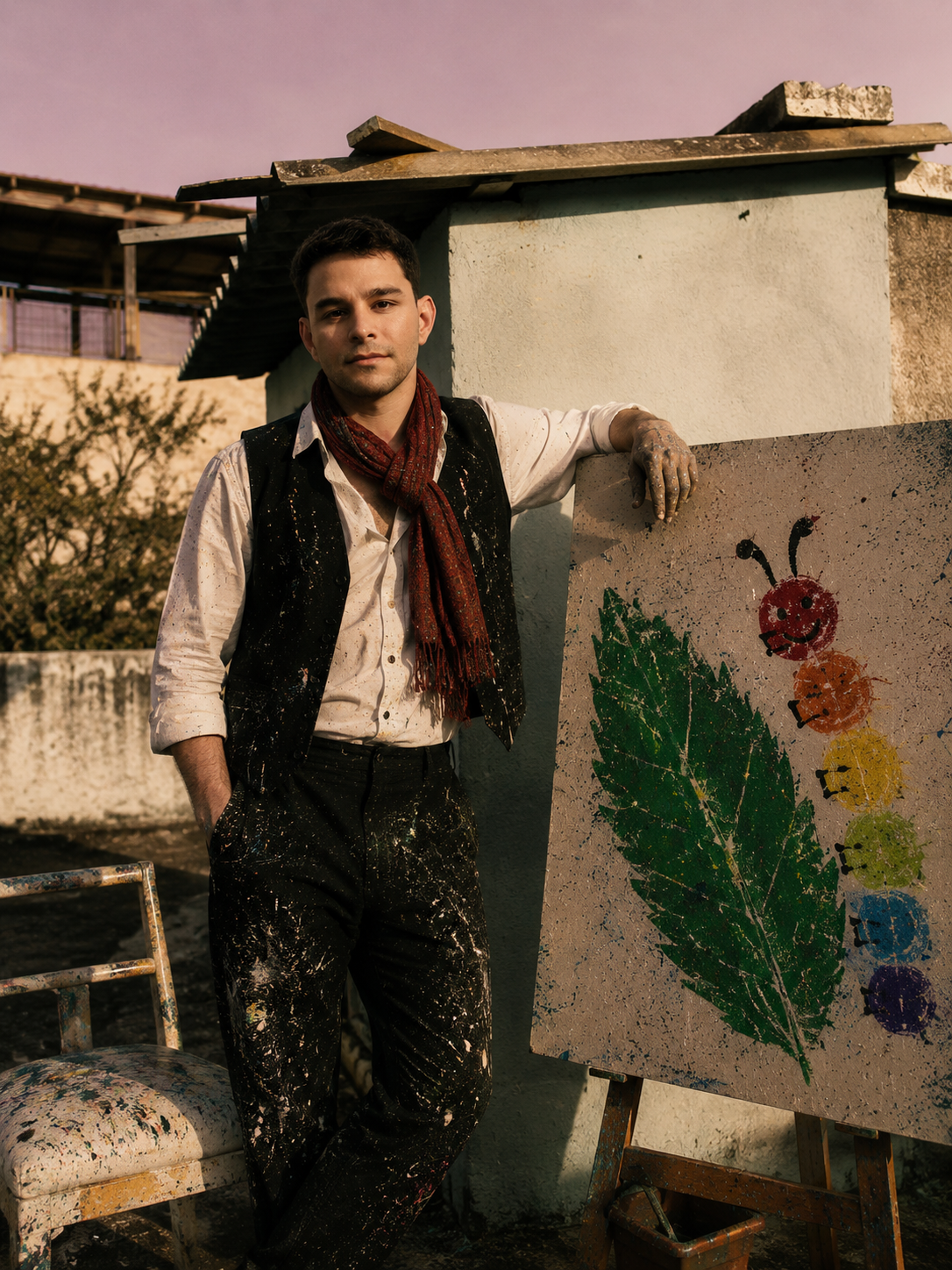
He paints six days a week.
The seventh is reserved for the finger.
Jacobim does not give interviews. He does not appear in photographs willingly. He has no public social media. He communicates mostly through handwritten notes and, occasionally, a typewriter he has owned since he was nineteen.
His first exhibition was held in a small room in Basel and attended by fewer than a dozen people.
Since then, work has been acquired.
The details are held privately.
He does not discuss prices, sales, waiting lists, or collections.
A painting is a painting. The rest is rumor.
Jacobim is married to the poet Julie Iwasaki.
He owns a dog that he does not name in interviews.